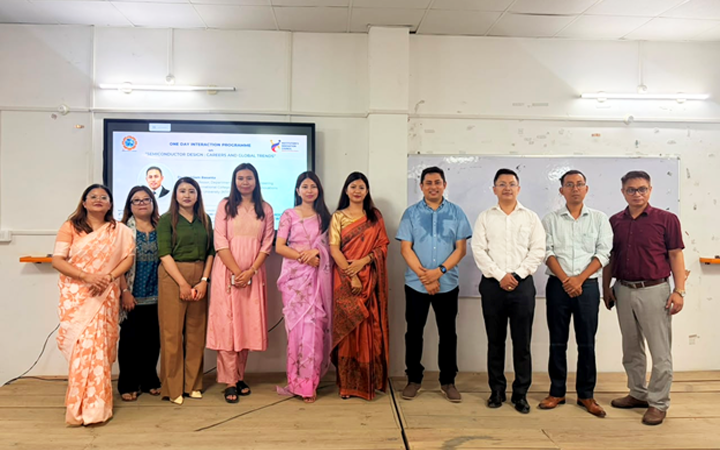
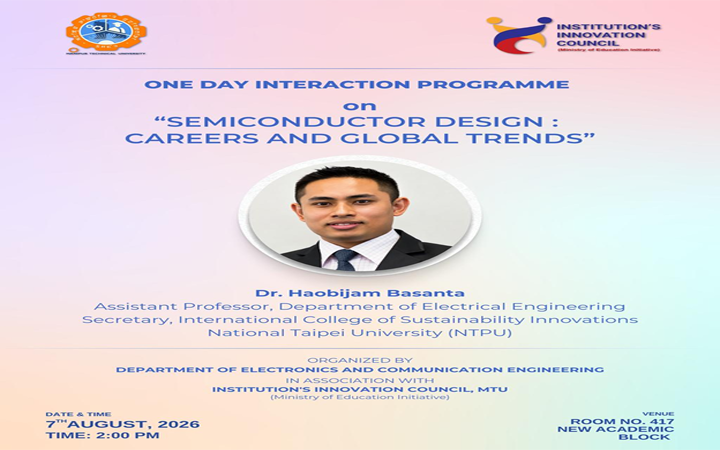
Event Report: One Day Interaction Programme on “Semiconductor Design: Careers and Global Trends”
Date: 7 August 2026
Time: 2:00 p.m.
Organized by: Department of Electronics and Communication Engineering, MTU in association with Institution’s Innovation Council
Target Audience: Faculty of Engineering, Research Scholars, and Students
Executive Summary
The special session focused on the strategic importance of Taiwan in the global technology market and provided a comprehensive roadmap for Indian students and faculty to pursue higher studies, research, and career opportunities. The speaker emphasized the deep connection between education, research, and the booming semiconductor industry.
Key Highlights of the interaction:
- Why Taiwan: Cultural and Economic Context
The session began by introducing Taiwan as a vibrant hub in Eastern Asia with a population of approximately 23.4 million. The speaker highlighted cultural similarities that make the transition easier for Indian students, particularly from the Northeast, noting shared dietary staples like winged bean, purple rice, bamboo shoots, and lotus root.
- Admission Roadmap and Academic Procedures
A clear 7-step guide was provided for students aspiring to study in Taiwan:
- Programs: Master’s and Ph.D. qualifications require accredited degrees and meeting specific departmental entrance exams.
- Timeline: For Fall intake, applications typically open on January 1st and close by March-April. Spring intake applications open on October 1st and close by November 15th.
- Documentation: Essential documents include a Statement of Purpose (SOP), Letters of Recommendation (LOR), financial statements, and copies of diplomas.
- Financial Support and Internship Opportunities
The speaker detailed various funding avenues to support international scholars:
- Government Scholarships: These include the Taiwan Scholarship (monthly stipends up to NTD 20,000), the MOE Elite Scholarship for lecturers, and the Huayu Enrichment Scholarship for Chinese language studies.
- Internships: Programs like TEEP (Taiwan Experience Education Program), NSTC IIPP, and TIGP provide hands-on research experience in high-tech labs with stipend support.
- The Semiconductor and Technology Ecosystem
A major portion of the talk was dedicated to Taiwan’s global leadership in semiconductors.
- Industry Leaders: Taiwan is home to world-class companies such as TSMC, MediaTek, UMC, and Foxconn.
- Research Roles: The speaker clarified that semiconductor careers are interdisciplinary, requiring experts in Electrical Engineering, Computer Science (AI and yield), Mechanical (robotics/thermal), Chemical (thin films), and even Civil Engineering (Fab construction).
- University Partnerships: Top institutions mentioned for English-taught semiconductor programs include NTU, NYCU, NTHU, NCKU, and Taipei Tech.
- Strategic Career Planning and Portfolio Building
The session provided a “Research Success Strategy” based on six pillars: Direction, Depth, Visibility, Network, Impact, and Well-being. The speaker advised students to:
- Focus over Multitasking: Depth in research is created by intense focus rather than busy-ness.
- Build Verifiable Portfolios: Employers prioritize demonstrated skills (e.g., GitHub repositories, technical reports, and working prototypes) over traditional resumes.
- Avoid Common Pitfalls: Mistakes such as “publication obsession,” ignoring mental health, or failing to check laboratory fit were highlighted as barriers to success.
12-Month Action Plan
The presentation concluded with a practical 12-month timeline for students:
- Months 1–4: Identify skill gaps and complete a focused technical project.
- Months 5–8: Build a portfolio, improve English proficiency (TOEFL/IELTS), and identify funding sources.
- Months 9–12: Contact professors, submit applications, and prepare for interviews.
Conclusion
The speaker encouraged the audience to “Start small. Build evidence. Apply strategically. Think globally”. Participants were invited to engage with official portals like studyintaiwan.org and join global communities to stay updated on emerging opportunities in AI, smart manufacturing, and green energy
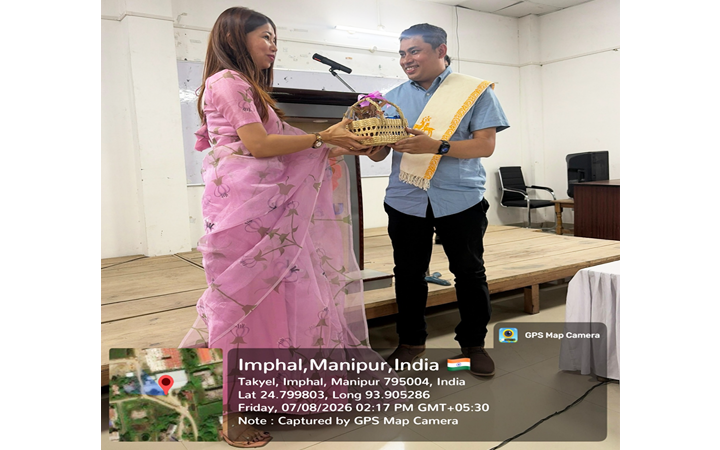
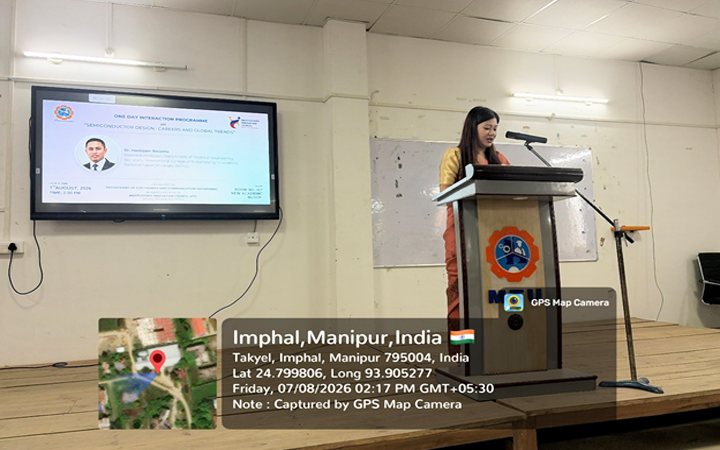
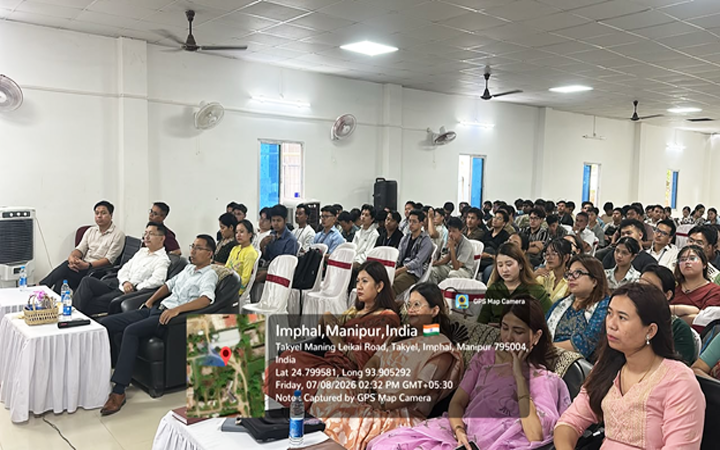
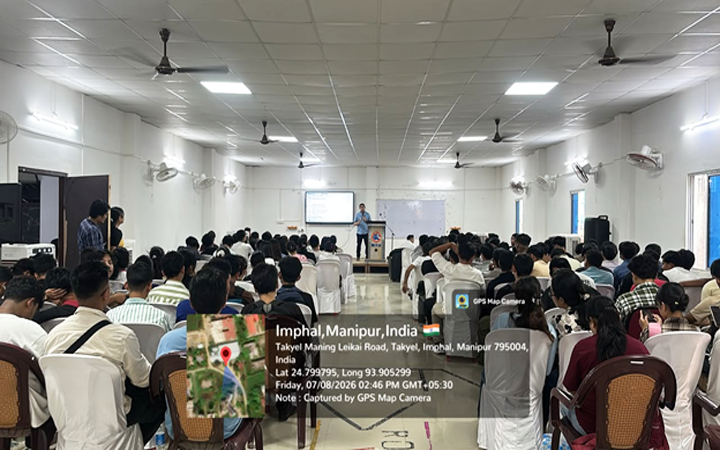
Gallery:
Last Updated on September 2, 2026 by Web Admin